The Cost of Stench And Who Pays It?
In Senegal, at least 50 protesters flooded onto the streets in Kayar in 2022 to demand the closure of a fishmeal plant named Barna.1 In Vietnam that same year, foul odors led hundreds of people from the country’s northeastern coast to surround a plant and, for days, to blare loudspeakers at it in protest.2 In India, the smell prompted residents to stage a demonstration that lasted more than 100 days in 2024, culminating in a boycott of local elections and in community members organizing their own parallel governance meetings, passing resolutions against three fishmeal factories that continued to operate despite the unrest.3
For people living near fishmeal plants around the world, the stench is by far the most common grievance. The Outlaw Ocean Project’s review of thousands of plants spread across more than two dozen countries surfaced hundreds of complaints, as well as dozens of violent protests and strikes, typically instigated by locals fed up with the foul smell.
This, however, is not an unsolvable problem. When fishmeal factory owners have tried to reduce the stink, they have usually succeeded. In 2008 in the US, in 2021 in South Africa, and in 2022 in Yemen, plant owners installed various types of devices, some of them called scrubbers, that researchers later concluded had drastically reduced the foulest-smelling chemicals.4M
Scrubbers are not more common partly because they can cost upwards of a million dollars.5 In wealthier nations, plant neighbors more often successfully pressure their governments to require odor controls. In poorer nations, people living in the industrial areas where these plants are built usually lack political clout. Their governments are also more desperate for revenue and thus more reluctant to put up regulatory burdens that may scare away foreign investment. As a result, the cost of this stench is paid not by seafood customers who eat the final commodity nor by the companies that profit from fishmeal. It is instead paid by the people living near the plants, since they have little real leverage to push back.6
In several countries, researchers have experimented with inexpensive approaches to countering the smell. In 2019, academics in Chile found that fishmeal factories could reduce the stench if plants used taller smokestacks so that the noxious chemicals were released higher into the sky, allowing the smell to dissipate more effectively. Also helpful, they found, was for plants to increase exhaust pressure so that the noxious fumes were emitted at greater velocity.7 In 2020, researchers in Iceland found that the stench from fishmeal processors could be decreased if plants slightly reduced the temperatures used during the heating phase of fishmeal production.8
Most research concluded that fully eliminating such foul smells would require costlier processing devices. These include a combination of specialized equipment such as gas incinerators, wet scrubbers, biofilters, bioscrubbers, and dust or particulate filters or electrostatic separators, according to a 2024 “Best Practices” guide, produced by the European Commission.9
There are three types of industrial scrubbers: wet, dry, and electrostatic. The fishmeal industry most often relies on wet scrubbers—so-called because this system uses a liquid to absorb and capture harmful substances from the flue before the exhaust is released into the atmosphere.10 Wet scrubbers, which can remove gases and particulates, are usually built on the outside of the fishmeal plant and are a relatively easy means of retrofitting a scrubber to a factory.11
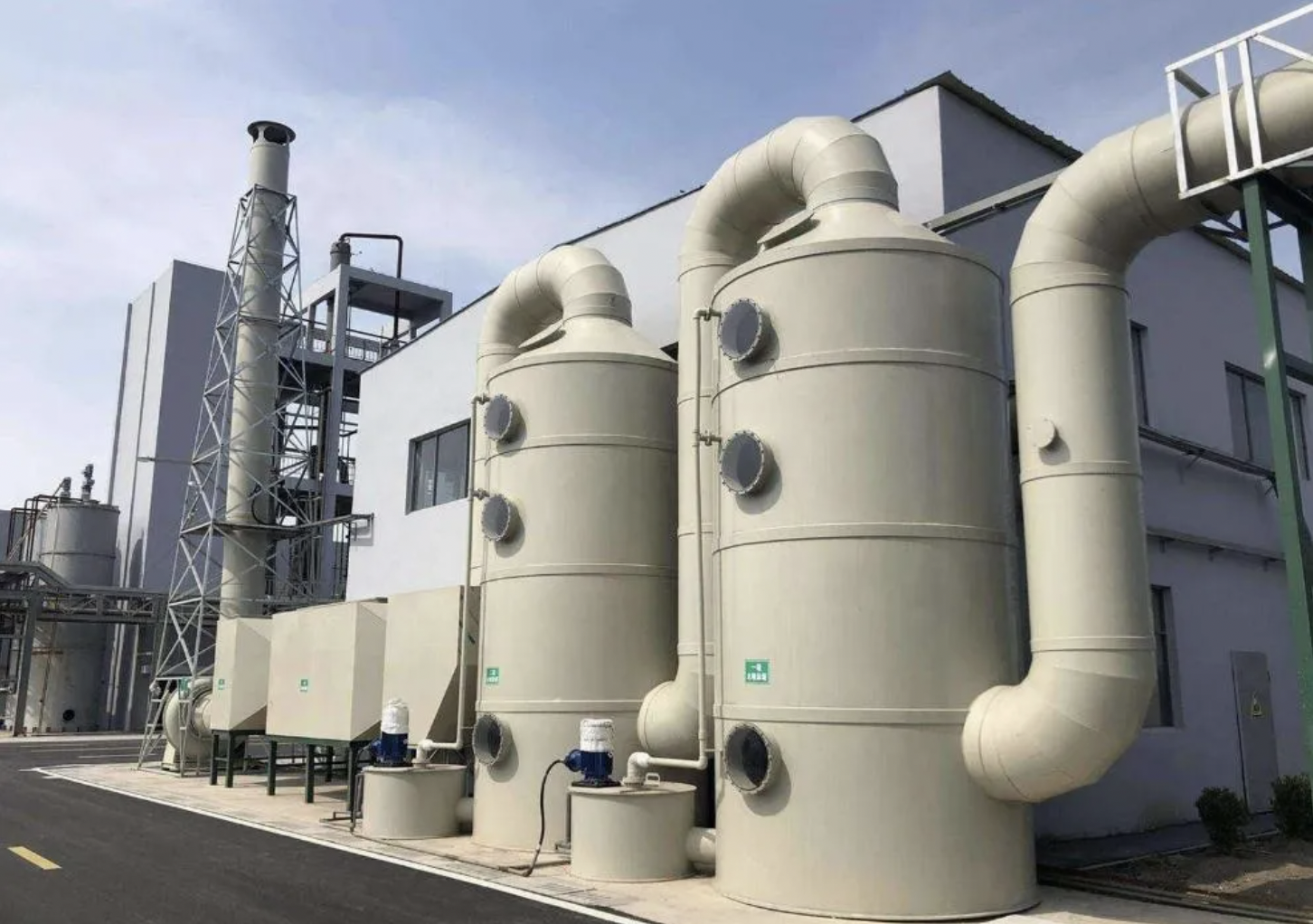
Government agencies in several countries have recommended wet scrubbers. In 2007, the Mar del Plata Regional Port Consortium in Argentina urged three fishmeal plants near the port to either install scrubber systems to remove the odor from water vapors or recirculate the vapors and reuse them as a generator of new energy.12 Argentina’s Attorney General’s office later sought to discern which techniques actually work. In 2016, it contracted the National University of Mar del Plata to conduct a study on the issue.13 That study concluded that two approaches showed decent results: gas scrubbers or high-temperature combustion to destroy the malodorous components in the vapors.
For several years, restaurateurs and residents in Argentina, living near Mar del Plata’s six fishmeal plants, have complained about the stench. At some times of day, the smell near the plants is so bad, they say, that guests at a nearby hotel have reportedly needed to step into the courtyard to vomit. In 2021, in a city north of Mar del Plata, trucks delivering raw materials to a new factory spilled loose fish skeletons and liquids onto the street, prompting complaints from residents who also reported the nauseating smell of cooking fish.14M
Some fishmeal plants in Chile have also implemented scrubber technology, according to the fishing industry association group Sonapesca.15 Chile’s Ministry of the Environment warned, however, that scrubbers only eliminate roughly 90 percent of the smell, which means residents still suffer.16 This partly explains why the country has seen several protests about fishmeal stench. In 2023, residents of the city of Coronel filed a lawsuit, asserting that the stench violated their constitutional rights to health and quality of life.17
Another odor-control device is the biofilter, which typically consists of a large container filled with coconut husks or wood chips, coupled with microbes that remove compounds such as ammonia from exhaust gases.18 A 2019 paper from the Journal of Environmental Management found that a biofilter with specialized microbes successfully removed up to 96 percent of trimethylamine (TMA)—the chemical that causes the distinct rotting smell of decaying fish—and 99 percent of ammonia from fishmeal plant emissions.19 One challenge with biofilters is that the bacteria used in them perform best when fed a constant air stream of organic material. The bacteria can die off if they go long periods without being fed foul air, or if they are subject to sudden, more intense odors that can occur during extreme weather conditions.20 Such biofilters also tend to require more space to install, which can be difficult for processing plants in densely populated areas.21
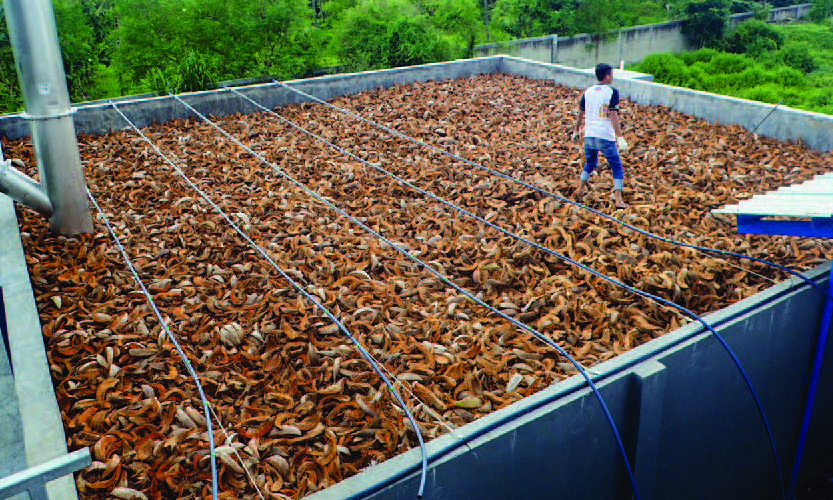
The most effective and affordable solution for fishmeal plants tends to be a combination of scrubbers and biofilters, according to William Golten, the managing director of A & S Thai Works, a company based in Thailand that designs and builds complete processing plants and manufactures components for odor control systems.22 Using a combination of equipment that is both cost-effective and efficient is possible, according to Golten.23
In hopes of finding cost-saving tactics, a researcher from the University of Barcelona investigated in 2020 the use of seawater in scrubbers, a practice not uncommon at fishmeal plants in Peru.24 The researcher concluded that scrubbing with seawater had limited effectiveness. A more effective method involved high-temperature combustion to burn some noxious gases, but this approach was often inaccessible in Peru and other poorer countries due to the high cost of installing and fueling the technology. Another worthy step, according to the researcher, was to add a biofilter to the wet scrubber systems, which was typically more affordable, costing less than $13,000. Such biofilters were capable of removing up to 100 percent of TMA, the researcher said.25