Could the World Stop Using Fish as Livestock Feed?
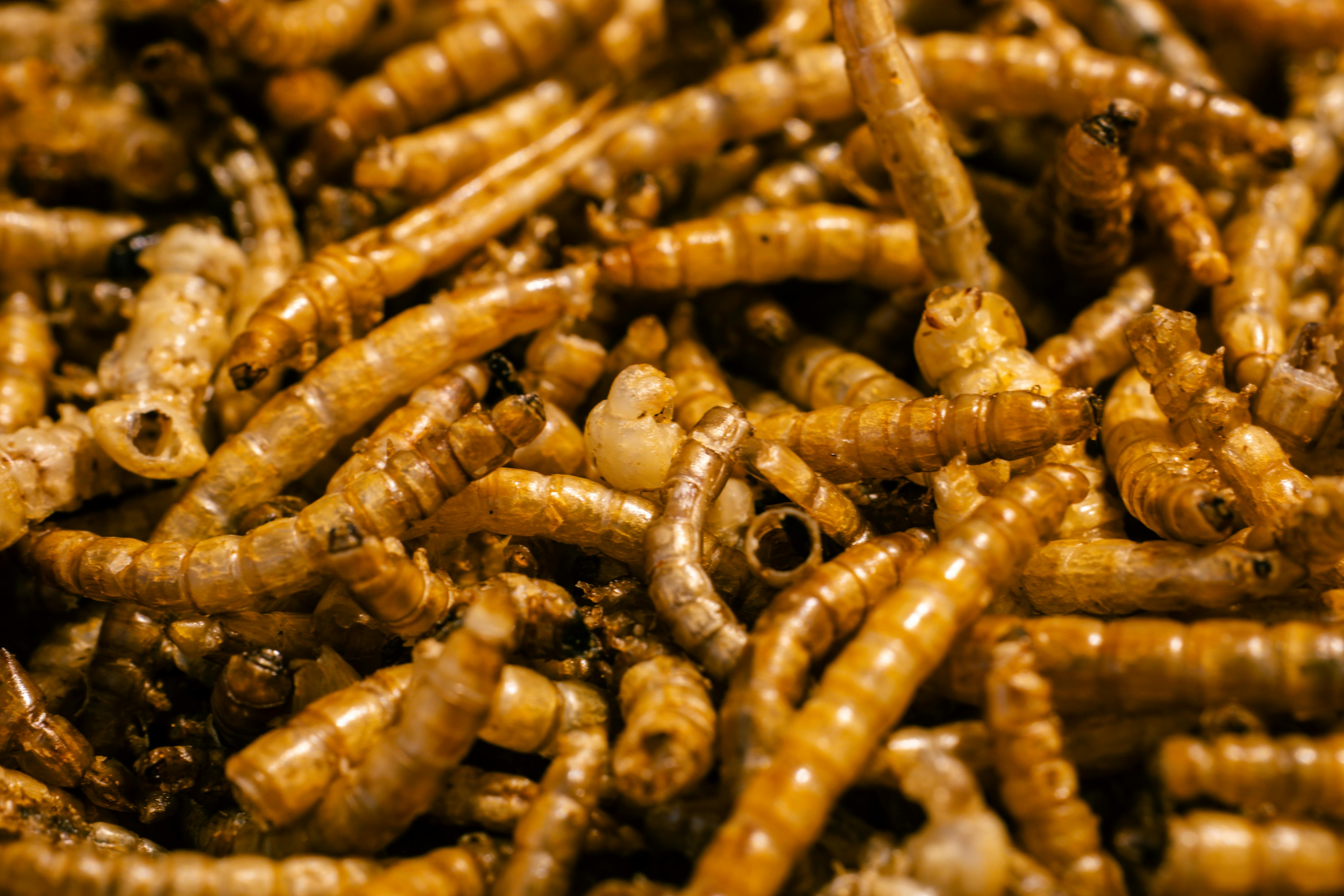
Inside a sprawling warehouse in northern France, millions of brown, inch-long mealworm larvae writhe in purple trays stacked 60 feet high.1 Grown by a company called Ynsect, these larvae are destined to be ground into a high-protein powder for livestock feed.
The company's mission is to spur a global farming revolution by mass-producing a replacement for fishmeal—a key ingredient in feed for chickens, pigs, and especially farmed fish.2 “If we make this switch, it’s a huge, huge intervention,” actor Robert Downey Jr., an early Ynsect investor, told talk show host Stephen Colbert in February 2021.3 Inspecting the final brown powder, Colbert remarked, “This looks like I could make cocoa.”4
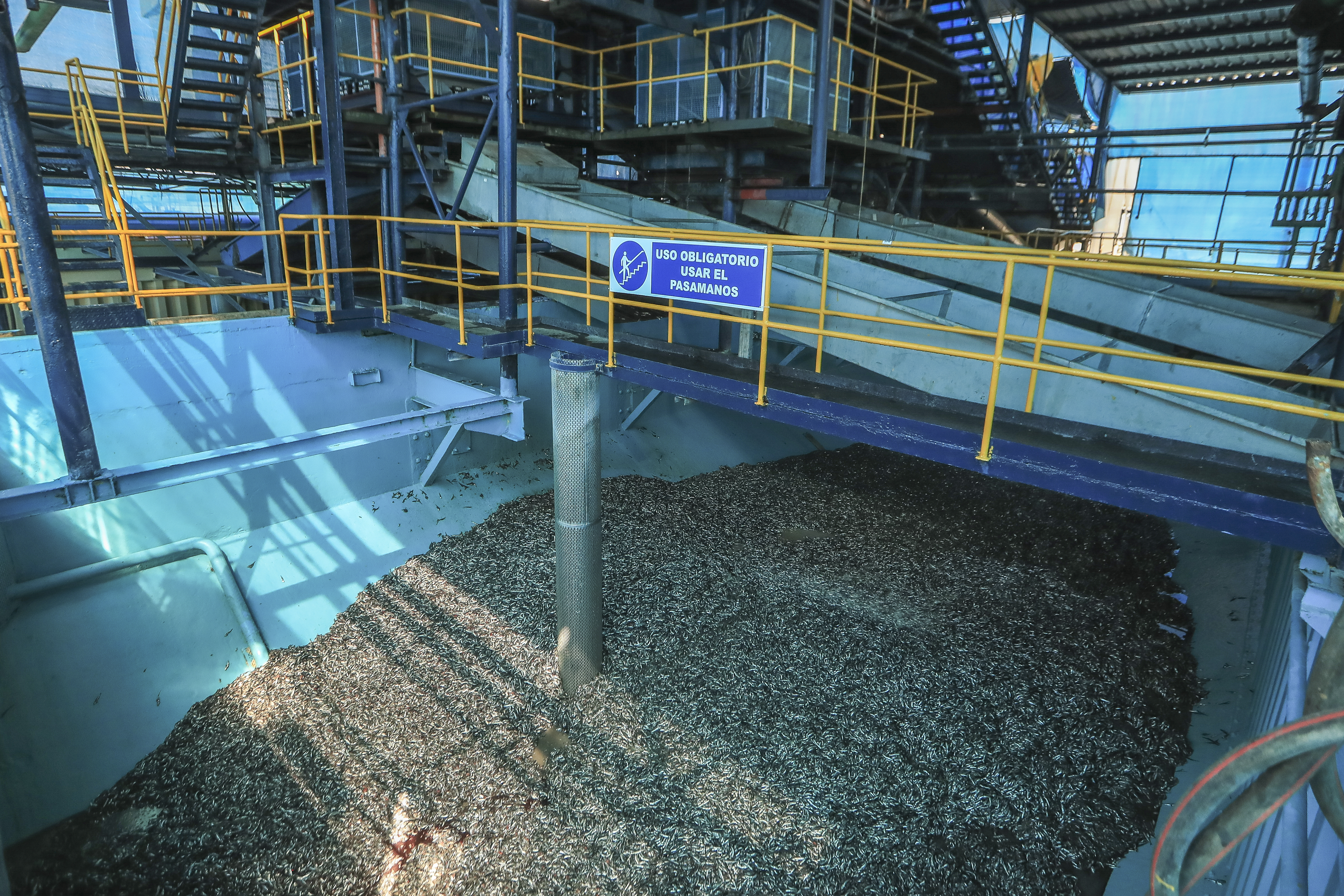
The need to replace fishmeal is urgent: Its production is decimating the oceans and accelerating the climate crisis. Over a fifth of all marine life pulled from the sea is converted into fishmeal, which is a major factor in why over a third of the world’s stocks are overfished and worsening every year.5
Ynsect broke ground in 2021 for what was hailed in the press as the world’s largest insect farm.6 France’s then Minister for Agriculture described the operation as “a symbol in this reconquest of protein sovereignty.”7 Investors flocked, sinking more than half a billion dollars into the company.8 But a year later, things were not going so well for Ynsect. By 2022, the company suffered over $105 million in losses, mostly due to minimal demand from buyers.9 The next year, the company announced it was scaling back its ambitions to concentrate less on fish and farm feed and more on high-end buyers in the pet food market.10 Ynsect co-founder Antoine Hubert explained the shift in priorities, saying, “We are really focused today on where the value, the revenue [is] the highest,” and where there is minimal negative impact to the climate.11
The rise and fall of Ynsect offers an instructive tale of how difficult it will be to lessen the environmental impact of livestock feed. The stakes are high. An investigation by the Outlaw Ocean Project of fishmeal plants in more than 60 countries found a pattern of crimes and concerns tied to the industry, including systematic dumping of toxic waste into local waterways, choking stench from the cooking of rotting fish, and extensive illegal fishing by the ships that supply these factories. The investigation also documented dozens of cases of avoidable worker deaths on ships and at fishmeal plants, as well as widespread instances of civil unrest as local communities pressed plant owners to stop producing dangerous pollution and horrid smells. Feed companies “need to take a long, hard look at what they’re putting into aquafeed, and that means removing anything based on fishmeal and fish oil from the market, because we need to be protecting wild fish today more than ever,” said Natasha Hurley, campaigns director for the nonprofit Foodrise, in a 2019 interview with Radio France International.12
Researchers have identified various potential alternative food sources—including seaweed, cassava waste, soldier-fly larvae, single-cell proteins produced by fungi and bacteria, and even human sewage. But none are being produced affordably at scale. The alternatives often lack the full range of nutrients that support the growth of farmed fish, especially omega-3. Certain options, like insect meal, are expensive, and as a result, there has been little interest among feed companies to pay a premium for these “green” alternatives.13
The bigger concern with livestock feed is its inefficient use of the planet’s resources. Globally, only a small percentage of the crops grown go toward feeding humans. In the US, barely more than a quarter of crop calorie production feeds people; over 67 percent is used to feed animals raised for human consumption.14 This indirect method, using animals as the “caloric middlemen,” is a highly inefficient use of food. As Jonathan Foley, executive director of the non-profit DrawDown, explained for National Geographic, “For every 100 calories of grain we feed animals, we get only about 40 new calories of milk, 22 calories of eggs, 12 of chicken, 10 of pork, or 3 of beef.”15
Fishmeal is one source of protein that is increasingly popular for livestock feed, used extensively in aquaculture, which produces half of the world’s seafood.16 Unlike bivalves such as oysters, clams, and mussels, which typically do not require external feed, the biggest challenge in farming carnivorous fish is feeding them. Food constitutes roughly 70 percent of this industry’s overhead.17 The aquaculture farms that yield some of the most popular seafood, such as salmon, tuna, shrimp, carp, or European sea bass, often consume more fish than they ship to supermarkets and restaurants.18 Before it reaches the market, a farm-raised tuna can eat over 15 times its weight in free-roaming fish converted to fishmeal.19 Farmed crustaceans like prawns are the biggest consumers, accounting for about 30 percent of fishmeal used globally.20
High in fat and protein, alternatives like maggots, grubs, and worms have been attractive replacements for fishmeal. The Food and Agriculture Organization of the United Nations (FAO) has also endorsed these insect larvae as a sustainable means of meeting the growing demand for protein in animal feed and human food.21 Raised on a slurry of food waste—requiring little land or water—experts have called this a far more “circular,” energy-efficient feed-to-food system.22 As of 2020, approximately one trillion insects were farm-raised annually for inclusion in food and animal feed.23
However, scaling these alternatives faces difficulties. Plant-based feeds, for instance, have struggled to produce farmed carnivorous fish like salmon that are rich in omega-3 fatty acids without feeding them fish that are also high in omega-3s.24 In response, some farmers have turned to oils derived from algae, the marine plants from which fish get their omega-3 in the first place.25 Yet, the biggest difficulty with using insects for protein remains scale. International Fishmeal and Fish Oil Organization Director General Petter Johannessen told Seafood Source in 2020 that “the numbers do not add up,” explaining that “even the most optimistic production forecasts for novel feed ingredients, ranging from 100,000 MT to 600,000 MT, would struggle to come close to the 3.5 million MT of fishmeal used every year within the aquafeed sector.”26
In 2021, Rabobank estimated that the demand for insect protein could rise fourfold by 2030, and that up to 40 percent of the total market could be used for aquaculture feed ingredients.27 Insect farming attracted significant investment, with around $1.9 billion directed towards start-ups between 2014 and 2024, and funding flows ramping up noticeably between 2020 and 2022.28
Converting food waste into feed was one of the biggest advantages insect farming was supposed to provide, but companies have faced major technical and regulatory barriers.29 Insects fed with low-quality materials—such as household, slaughterhouse, or catering waste, as well as manure—have lower growth rates, poor nutritional value, and are associated with food safety concerns. These factors create an inferior feed ingredient that has proven unsuitable for aquaculture.30 In the EU, restrictions aiming to prevent disease in animals, including insects, prohibit feeding them food waste. This means that most companies in the EU are required to use feed-grade grains to raise insects.31 As a result, 75 percent of insect producers use food or feed-grade fruits, vegetables, and cereals, while one-third use commercial animal feed. Instead of upcycling food waste, insect farming companies are therefore directly competing with humans and livestock for resources.32
Another main ingredient in feed for fish farms and other types of livestock is soy, which raises its own concerns. Roughly 40 percent of the world’s arable land is used for animal feed, particularly soy.33 As of 2021, the world’s leading producer of soy was Brazil, where industrial farming has been a major driver of deforestation and human rights abuses, including the systematic and often violent seizure of Indigenous lands by private companies.34 The same trend can be seen in Bolivia, where the expansion of soy resulted in the clearing of 2.2 million acres of forest between 2001 and 2021.35 Collectively, land dedicated to soy production in South America covers an area larger than France, much of it in previously forested areas cleared for this purpose.36 Trying to shift away from fishmeal to focus more on soy brings additional costs.37 These problems would not be solved simply by pivoting to another protein source, according to a 2023 report in the journal Frontiers in Sustainable Food Systems.38 “There appears to be no ‘silver bullet, free from tradeoffs’ livestock feed formulation that can guarantee global sustainability,” the report concluded.39
What can be done? The short answer, according to experts, is to change our diets and the feed we give to livestock.
Rather than feeding crops to livestock being reared for beef, the World Wildlife Fund has suggested giving the cows food not fit for human consumption and having only humans eat the edible crops, thereby saving millions of acres of land, according to a 2022 report from the organization.40 Researchers also suggest the problems caused by soy agriculture in the Global South could be alleviated if Europe’s livestock industry shifted to a reliance on locally-grown proteins like alfalfa and fava beans.41 This change, they say, would reduce the carbon footprint of the feed industry by approximately 10 percent.42
However, there may be a deeper issue at play: Sometimes solving one problem creates new, even worse problems. Aquaculture was meant to slow ocean depletion on the logic that by growing fish on land, the world could take fewer fish from the sea. The problem was that the industry began using fish from the sea to feed and fatten the fish grown on land using fishmeal. Now, aquaculture is a major driver of declining fish stocks in the ocean. Similarly, the switch to insects aimed to replace fishmeal as feed. The problem now is that the insects are often being fed food-grade crops, further jeopardizing food security and accelerating the climate crisis.43
Some researchers have said this cycle of best intentions and unintended consequences stems from a quick-fix mindset—one that suggests bigger problems like the climate crisis, unsustainable fishing, or global food insecurity can be solved purely through innovation and technology. The flaw in this outlook is that it never reckons with the need to reduce how much rich nations consume and produce, said Kohei Saito, a philosophy professor at the University of Tokyo.44 Technological solutions are important, he said, “but at the same time, we should start talking about the need to reduce the number of cars, for example, or industrial meat consumption, or frequency of flying.”
Jennifer Jacquet, an environmental-studies professor at the University of Miami, made a similar point. Shifting to less meat-intensive diets, she said, would help to reduce the impacts associated with harvesting plants and animals to manufacture feed.45 “If done correctly, aquaculture could provide sustenance for our growing planet as well as reduce overfishing,” she added.46 This would require a shift in what we consume, “eating more bivalves—oysters, mussels, and clams—instead of fish, shrimps, and octopus.”47