China IV: Where Tibet’s Sacred Waters Became a Factory
For much of human history, the Tibetan Plateau seemed to stand outside the full reach of human design. Nearly three miles above sea level, swept by brutal winds and winter cold, it was a place where glaciers fed the rivers of Asia, where grasslands ran toward mountains held to be alive with spirit, and where remoteness itself offered a kind of protection. Empires pressed in, pilgrims crossed through, armies claimed it, but the plateau’s scale and severity long imposed their own terms. It was a landscape that appeared to resist easy conquest—not only geographically, but cosmologically: a world where lakes, peaks, and animals were woven into systems of reverence as much as survival.
That old remoteness is vanishing. In the 21st century, places once dismissed as too high, too dry, too cold, or too far away are being reclassified as strategic treasure: river headwaters to be dammed, empty-looking plains to be covered in solar panels, harsh frontiers to be made newly productive. Across the planet, the modern hunger for clean energy, mineral wealth, and ever more food is pushing industrial ambition into landscapes once thought marginal to it. The Tibetan Plateau has become one of the starkest expressions of that shift—a place where the language of progress now arrives in the form of turbines, transmission lines, relocation campaigns, and fish farms.
Behind this transformation lie two of the biggest material revolutions of the modern age: the global push toward renewable energy and the global turn toward fish farming. Around the world, electricity is being remade through dams, wind farms, and sprawling solar fields, while seafood is increasingly being produced not by wild capture but by industrial systems of ponds, pens, tanks, and cages. More than half of all seafood consumed globally now comes from aquaculture rather than wild catch.1 Both shifts are often presented as triumphs of necessity and ingenuity—proof that humanity can feed more people and burn fewer fossil fuels. But revolutions of this scale do not happen abstractly. They happen in specific places, with real rivers, real grasslands, real religious traditions, and real communities made to bear the weight of transformation.
No country has pushed those twin projects further or faster than China. It has become a colossus in aquaculture and the central engine of the global renewable build-out, expanding both with a scale and speed unmatched anywhere else.2 Fish farming has been promoted in part as a way to ease pressure on China’s overfished and polluted coastal waters, and in part as a way to secure more domestic supplies of a protein increasingly prized by the country’s growing middle class.3 On paper, the results can look dazzling: more farmed fish, more solar, more hydropower, more evidence that scarcity can be engineered away. On the Tibetan Plateau, where water, mountains, and animal life carry deep spiritual meaning, those twin revolutions have converged in a form at once visionary and grotesque.
Few images capture the strangeness of that convergence better than what now floats on the surface of Longyangxia, a vast emerald reservoir on the upper Yellow River: hundreds of mechanized cages holding Atlantic salmon in cold blue water nearly 9,000 feet above sea level. Nearby, millions of dark solar panels spread across the plateau. Below the reservoir lie the remains of villages, monasteries, and cultural sites swallowed by a state-built dam. To Chinese planners, this is a triumph of engineering: proof that even one of the world’s most forbidding landscapes can be bent toward national goals.4 To many Tibetans, it is something else entirely: a sacred homeland steadily transformed into infrastructure.
Completed in 1989, Longyangxia was then China’s largest man-made reservoir, covering 148 square miles—larger than Philadelphia.5 Sitting nearly 8,800 feet above sea level, it averages 260 feet in depth. The reservoir was created by the Longyangxia Dam, a 584-foot-tall hydroelectric structure and the first large, high-altitude cascade dam on the upper Yellow River.6 Chinese engineers have described the Tibetan Plateau as “the main battlefield of China’s hydropower construction,” and Longyangxia as one of its earliest and most consequential campaigns.7 Adjacent to the reservoir, the Longyangxia Dam Solar Park spreads across ten square miles in millions of dark-blue photovoltaic panels. When it opened in 2017, it was the world’s largest solar installation.8 Together, the dam and solar park form what Chinese officials describe as the world’s largest integrated hydropower-solar hybrid station, producing up to 2,130 megawatts.9 The dam’s turbines help smooth fluctuations in solar output, a model now central to China’s energy strategy. Across Tibet and Xinjiang, more than 90 hydroelectric dams are already operating, generating over 48,000 megawatts—enough to power roughly nine million homes.10 Another 150 dams are proposed or under construction.11
If Longyangxia is one of the plateau’s most arresting symbols, it is also one of the clearest expressions of a broader state vision.12 In September 2022, China’s State Council issued a directive titled Notice on Practicing the Concept of Big Food, urging diversification beyond staple crops to strengthen food security. The document explicitly encouraged the “scientific use of Gobi, deserts, and other areas” to develop modern, water-efficient agriculture—casting desert and inland aquaculture not as eccentric experiments, but as part of a national strategy.13
For many Tibetans, however, Longyangxia is not a monument to progress but a symbol of displacement, extraction, and erasure. To build the dam, authorities relocated 34 villages across five townships, uprooting more than 3,800 households—around 20,000 people—between 1977 and 1991. Homes, monasteries, cemeteries, and cultural sites were demolished in advance of flooding. On the reservoir’s southern edge, water levels rose unpredictably, forcing some communities to relocate as many as three times, according to a 2016 study in Inner Asia. More broadly, the state has relocated roughly half a million Tibetans for development projects and “poverty alleviation,” Human Rights Watch reported in 2025, citing coercive tactics including repeated home visits, implicit threats of punishment, and warnings that utilities could be cut off for those who refused to move.14
The disruption extended beyond geography. The Inner Asia study found that relocating mostly nomadic and semi-pastoral communities fractured social networks and livelihoods. Families were often placed in dense housing complexes lacking pastureland or farmland, making traditional livelihoods impossible. In one case, villagers from Bya mdo Township were resettled more than fifty miles from schools, hospitals, and markets. Relocation has also accelerated the closure of Tibetan-language schools and the funneling of children into boarding schools, where instruction is conducted almost entirely in Mandarin.15 Between 800,000 and one million Tibetan children—roughly 80 percent of school-aged Tibetans—are now enrolled in such institutions.16 Access to monasteries has also been curtailed. “The absence of public worship spaces,” the study noted, “is among the most common grievances in resettlement areas.”17
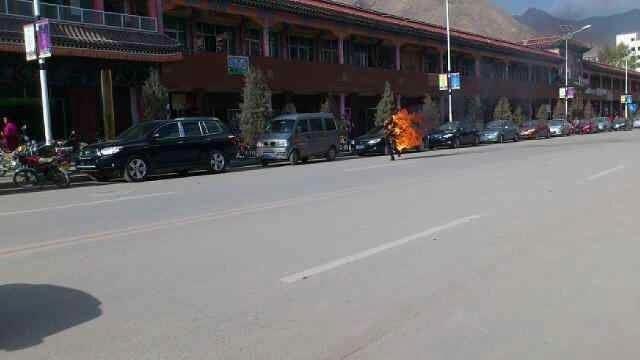
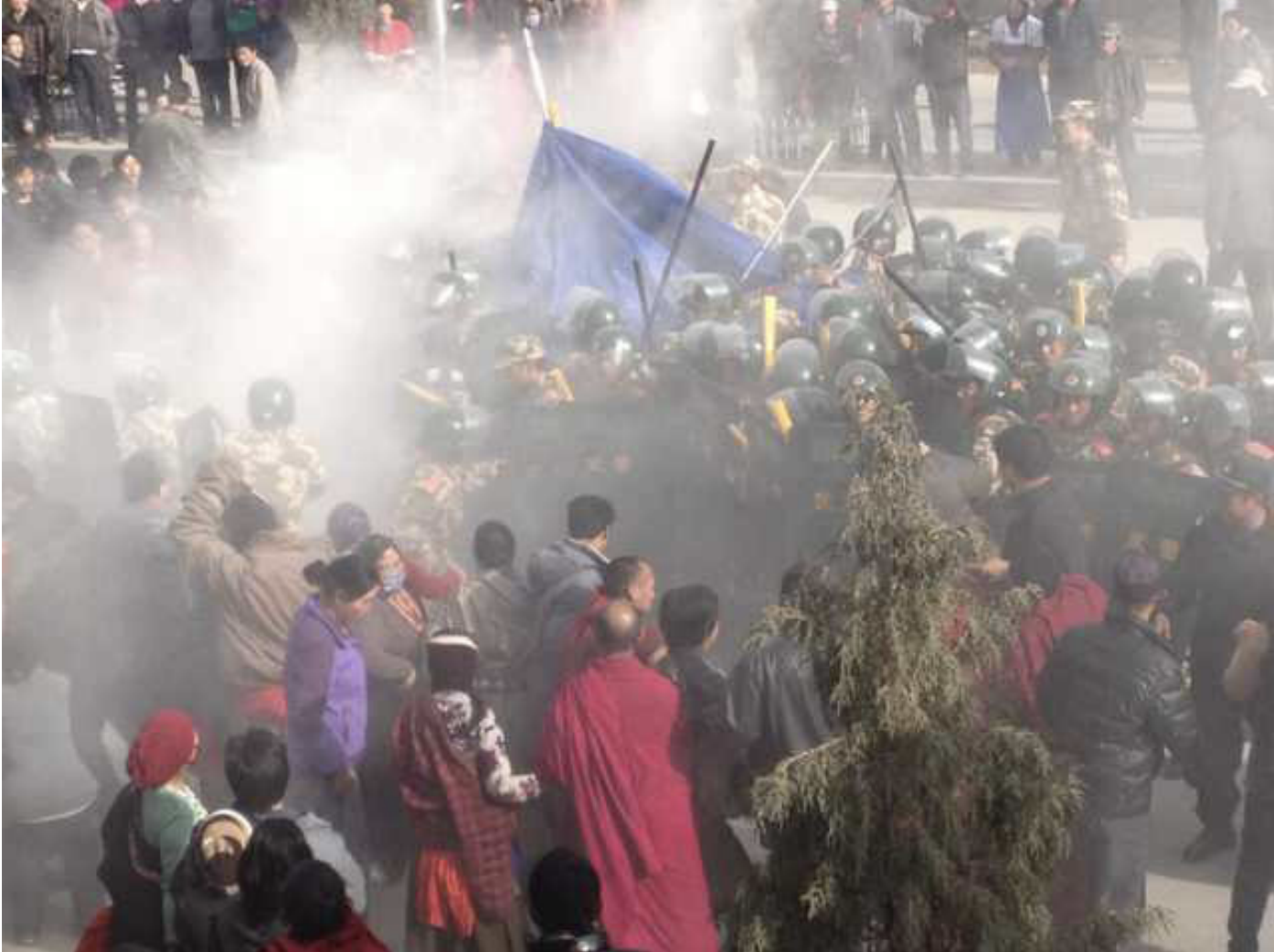
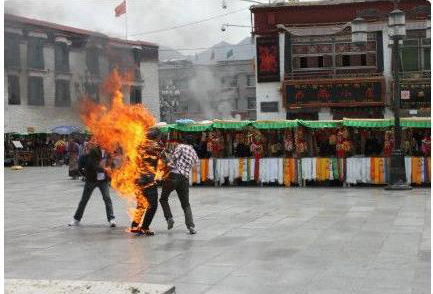
For some Tibetans, the destruction has felt so total—and the avenues for protest so constrained—that resistance has taken extraordinarily extreme forms. “Tibetan brothers and sisters unite.” “Freedom for Tibet.” “Dalai Lama, return to Tibet.” These phrases were spoken by Tibetans who set themselves on fire in protest, often repeating slogans used by earlier self-immolators.18 As of December 2025, at least 169 Tibetans had self-immolated, typically on camera, outside police stations, monasteries, or public squares, after dousing themselves with gasoline and igniting it.19 Carole McGranahan, an anthropologist at the University of Colorado, explained that Tibetans describe these acts as self-burning (ranglü mesek), self-offering (ranglü chöbül), or self-offering in fire (ranglü mechö). Within Tibetan Buddhism, she said, such acts are framed as religious sacrifice—akin to fire offerings on household or monastic altars, where flames are kept perpetually lit.20
Many self-immolators have called for the return of the Dalai Lama, the exiled spiritual leader who fled to India in 1959 after the suppression of a Tibetan uprising.21 Beijing regards him as a separatist threat; his followers view him as a living embodiment of compassion.


Large-scale infrastructure has also accelerated demographic change.22 At the Third Tibet Work Forum in 1994, then-premier Li Peng declared that Tibet lacked the capacity to develop independently and would require sustained state intervention.23 The government launched the Tibet-Aid Project, pairing Tibetan regions with inland provinces and dispatching hundreds of Han cadres—party officials, engineers, school administrators—beginning in 1995. Incentives included inflated salaries, housing allowances, altitude stipends, and extended leave. According to the 2020 census, Han residents accounted for 12 percent of Tibet’s population, an 81 percent increase since 2010 and nearly five times the 1990 figure.24 The government has also encouraged tourism to the region. Tibet saw about 70 million visitors in 2025, a sharp increase from 40 million in 2019.25
These cadres were tasked not only with economic development but with cultural transformation.26 A 2014 article in Tibet Daily argued that farmers and herders suffered from “poor market awareness” and “backward employment concepts,” calling for military-style training to transfer “surplus labor.”27 By 2020, the Tibetan government said it had trained more than half a million such workers.28 “The transformation from tents to apartments and from nomads to residents,” said Ye Wanbin, a prefectural governor in Qinghai, “marks the journey from feudal backwardness to socialist modernization.”29
Those pressures have begun to attract scrutiny abroad. The U.S. State Department has increasingly focused on Tibet. In August 2023, it announced visa restrictions on Chinese officials “for their involvement in the forcible assimilation of more than one million Tibetan children.”30 Unlike Xinjiang, Tibet is not covered by U.S. legislation banning imports linked to forced labor. In June 2025, however, the European Union raised concerns with Beijing over forced labor and labor-transfer programs affecting Tibetans and urged China not to interfere in the Dalai Lama’s succession.31
For many Tibetans, Longyangxia’s final indignity lies atop the reservoir itself: more than 200 automated fish cages imported from Norway.32 The Longyang Zhixian fish farm is now China’s largest salmon producer, yielding roughly 15,000 tons annually by late 2025 and accounting for 97 percent of the country’s salmon exports.33 It was the first domestically produced Chinese salmon approved for export to Europe.34 Between 2023 and 2024, its export value increased tenfold, reaching markets across Europe, East Asia, and Russia.35M Longyang Zhixian did not reply to a request for comment.36
Fish farming, however, collides sharply with Tibetan beliefs.37 Fish occupy a sacred place in Tibetan Buddhism; the golden fish is one of the Eight Auspicious Symbols, representing liberation and abundance. Historically, water burials placed the dead into rivers for fish to consume—making the eating of fish taboo for many Tibetans. Rivers and lakes are also believed to house protective spirits, or lu. McGranahan explained that harming fish is thought to anger these beings and invite calamity.38 Industrial aquaculture, which kills millions of sentient creatures, violates the Buddhist principle of non-harm. Ethnographic research published in 2022 found that Tibetans view fish as the most “pitiful” beings in saṃsāra, unable to cry out when killed and thus accumulating disproportionate karmic harm.
Experts inside and outside China have described inland and desert aquaculture as a genuine technological achievement, and in China it has also become a source of national pride. A 2020 report from the U.N. Food and Agriculture Organization praised “rapid and significant advances” in inland aquaculture that had enabled fish farming in “arid regions with saline-alkaline water,” including Xinjiang’s Gobi Desert, “the farthest place from the sea on Earth.”39 Techniques such as integrated rice-fish systems, the report said, can improve productivity and resource efficiency while reducing environmental impacts. In official Chinese accounts, farms like Longyangxia are held up as proof that scarcity, distance, and harsh climate can be overcome by engineering.40
Adding to the insult, some villages submerged by the reservoir were abandoned too quickly for demolition. Houses, shrines, and animal pens remain underwater, frozen ruins of a vanished past. Above them, cages holding more than 10,000 salmon each release a steady rain of waste—feces, feed, and dead fish—burying the remnants beneath a slow-growing layer of sludge. “It’s grotesque,” McGranahan said. “Putting a commercial fish farm atop Longyangxia is pouring salt on a wound, but the wound itself is an atrocity.”41
China’s drive for green energy continues unabated. Bryan Tilt, an anthropologist at Oregon State University, noted that compensation and social support for relocated Tibetans have improved in recent years. Still, he said, the transition carries heavy social costs. “Unlike the U.S.,” he added, “China is acting with urgency to move away from fossil fuels, but that urgency doesn’t erase the damage.”42 The Yellow River now hosts at least 32 large- and medium-scale dams along its main stem.43 The development of hydropower dams in Tibet also has consequences for neighboring countries as waters that previously flowed to India, Myanmar, and Bangladesh are squeezed off.
In 2024, hundreds of Tibetans gathered near the Yangqu hydropower expansion, sixty miles upstream from Longyangxia, to pray and prostrate themselves in farewell to Atsok Gon Dechen Choekhorling monastery, founded in 1889.44 The monastery was demolished that July. At least one villager was detained for sharing photos of the destruction and an image of the Dalai Lama online.45 “There are almost no avenues for protest in Tibet,” said Sophie Richardson of the Network of Chinese Human Rights Defenders. “Extreme surveillance and fear of separatism leave people with few choices.”46
Official Chinese media portray aquaculture as salvation.47 The government has not left that narrative to chance. A 2017 Fisheries Poverty Alleviation and Tibet and Xinjiang Aid Action Plan called on local officials to “strengthen communication and coordination with mainstream media” and “systematically publicize the progress of fishery poverty alleviation,” in order to foster “an environment of positive public opinion.”48 “Before cold-water fish farming,” a salmon producer told Qinghai Daily in 2022, “people could only watch the Yellow River flow past their feet.” Now, he said, they had “fished a happy life from the river.”49 Government plans call for further expansion. As of 2024, at least 60 fish farms spanned 86,000 acres across the Tibetan Plateau—about half producing salmon, much of it for export.50M
Longyangxia is often presented as proof that even this high, sacred, unforgiving plateau can be bent toward food and power. But it may look less like an endpoint than a prototype. In July 2025, China began construction on what it says will be the world’s largest hydropower project, on the eastern edge of the Tibetan Plateau, a five-dam cascade on the lower Yarlung Zangbo projected to generate 300 billion kilowatt-hours of electricity a year.51 For Beijing, it is another triumph of clean energy and national ambition. For Tibet, it is a sign that Longyangxia’s waters are not the last to be remade.